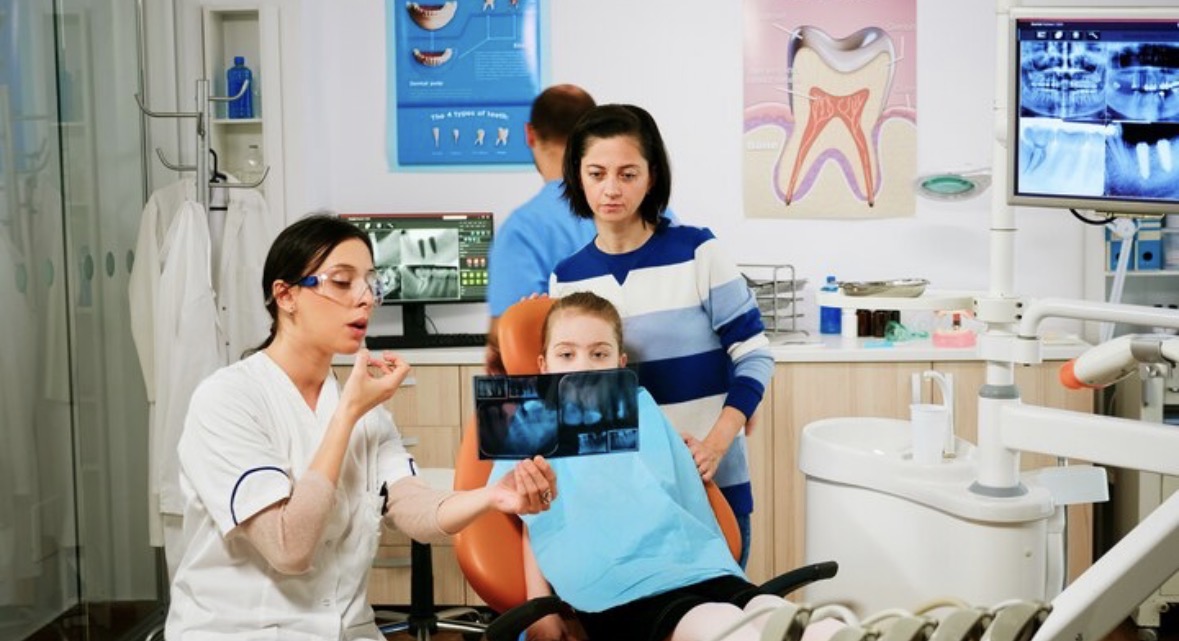
Most parents feel at least a little uncertain the first time a dentist recommends X-rays for their young child, and that hesitation makes complete sense because nobody wants their child exposed to radiation if it isn’t necessary. The good news is that dental x rays for kids today involve very low levels of radiation thanks to modern digital imaging technology, and when they’re ordered at the right time and for the right reasons, they give dentists information that a visual exam simply can’t provide on its own, like whether cavities are forming between teeth, whether permanent teeth are developing correctly beneath the gums, or whether there are any structural concerns worth monitoring over time.
The frequency with which X-rays are recommended depends on the individual child’s risk for decay and not on a fixed calendar schedule, which is something parents sometimes don’t realize. A child with a history of cavities or who is considered higher risk for decay may benefit from more frequent imaging while a child with healthy teeth, excellent home care, and low cavity risk may only need X-rays every couple of years. Your child’s pediatric dentist is the right person to make that call based on a clinical exam, your child’s health history, and the current state of their teeth.
Modern digital dental X-rays use a fraction of the radiation that older film-based equipment required, and the exposure from a typical set of pediatric dental X-rays is often lower than what your child encounters from background radiation just going through a normal day outdoors. According to the American Dental Association’s X-ray safety guidance, radiation from dental imaging represents a very minor contribution to total radiation exposure from all sources, and dentists are trained to follow the ALARA principle, which stands for As Low As Reasonably Achievable, meaning every effort is made to use the minimum exposure necessary to get a diagnostically useful image.
For parents who want to understand exactly what pediatric dental X-rays look for and when they’re used, it helps to know there are a few different types. Bitewing X-rays are the most common and show the crowns of the upper and lower back teeth, which is where cavities between teeth most often form and where they’re invisible to the naked eye. Periapical X-rays show the full length of individual teeth, including the root, which is important when a dentist suspects an infection or wants to check how a specific tooth is developing. Panoramic X-rays give a wide view of all the teeth and jaw together and are often taken when a child is approaching the age where permanent teeth are expected to come in.
One thing that reassures most parents once they understand it is that pediatric dentists are specifically trained to minimize radiation exposure for young patients, who are more sensitive to radiation than adults because their cells are still developing rapidly. The AAPD’s oral health publications reflect a consistent commitment to evidence-based care standards for young patients, including careful, individualized decisions about when imaging is genuinely needed rather than ordered out of habit or on a blanket routine schedule.
If you ever have questions about why a specific X-ray is being recommended for your child, asking your dentist to explain what they’re looking for and what they would learn from it is not only reasonable but encouraged. A good pediatric dental team will welcome that conversation and take the time to answer it clearly because informed parents are partners in their child’s care, and understanding what’s happening and why makes the whole experience better for everyone in the room.